Saturday, November 26, 2011

Guest Post: Heather Hildenbrand


Excerpt from Cold Blood:

I arrived at the door at the same time as my mother. She stepped in front of me and eyed the peephole before pulling it open. She frowned, which didn’t give away all that much since she'd been doing a lot of that lately, but then she stepped back, and I saw who it was.

“Hey,” Wes said. His eyes locked on to mine.

“Hey,” I answered, staring back.

“Dinner’s in an hour.” My mother held onto her frown, but she wandered back towards the kitchen, leaving us alone.

Sam and Angela slipped past me, knowing smiles pasted on their faces.

“We’d better get going,” said Angela.

She stepped forward and hugged me tightly. When she pulled away, Sam threw an arm around my neck and squeezed. “Yum,” she whispered.

“Call us when you get settled in,” Angela reminded me.

Sam turned and winked. “Don’t do anything I would.”

I rolled my eyes and waved goodbye. When they were gone, Wes stepped inside and shoved his hands into his jean pockets. He looked wound up, rolling back and forth from his heels to his toes.

“Everything okay?” I asked.

“Can we take a walk?” he asked, glancing towards the kitchen–and the sound of a spray bottle at work.

“Um, how about the backyard?” A knot of anxiety pinched my gut.

He nodded, and I led him through the sunroom and out the sliding door. The sun was bright and cheery; hinting at warmer days to come but with enough of a chill in the air to remind you it was still technically winter.

The branches were still bare, dead leaves covering the ground. It had rained during the night and the smell of wet grass and mud covered everything, permeating every breath until you could taste spring trying to emerge. Somewhere deep in the trees, a single bird called intermittently. It all felt entirely too lonely.

I wrapped my sweatshirt around myself and crossed my arms. We walked to the edge of the yard and stepped into the covered gazebo, sitting on the small bench that faced the woods.

The silence ran on, and I felt my stomach tighten. Was this him being reluctant to say goodbye, or was it something more?

“How’s Jack?” I finally asked.

“He’s better, I guess. Still in bed, though. Fee won’t let him up and he’s going a little crazy.” A ghost of a smile appeared and then faded again. “You can hear them picking at each other in every room of the house. I was glad for the chance to get away.”

“At least you can go home at night,” I said.

He shook his head. “I’ve moved some stuff over. I’m going to stay with them for a while. With Jack out of commission and Miles still out there, I don’t want to leave Fee.”

“That makes sense.” I tried to read into his responses and figure out what he wasn’t saying. He seemed tense, fidgeting with his pants, and shoes, and whatever else was close. “Wes. What’s wrong?”

Wes’ eyes flickered to mine and away again, never really settling on any particular spot. A nervous pang went through my gut. “Wes?”

“Jack pulled me aside yesterday. He said he knows he can’t handle things himself with The Cause.” He paused. “He wants me to step up, help run things.” He finally looked up and met my eyes. “He wants me to lead.”

*Visit the author's website to find out where you can read the next installment of Cold Blood*

Wood Point Academy is not at all what I expected. For one thing, it looks like a cross between military school and Buckingham Palace. Everyone stares, the floors shine so bright you can see your reflection in them from a mile away, and no one smiles. Unless they're kicking your butt in the process.
At least I've got plenty to take my mind off the fact that my psycho cousin, Miles De'Luca, keeps calling and declaring his love and promising to come for me just as soon as he's destroyed anyone standing in our way. Wes isn't going to like that idea. So between Miles, Wood Point's evil welcoming committee, and the drill sergeant hottie trainer from hell, I just keep asking myself, how did I end up here?

Cold Blood is Book 2 in the Dirty Blood series. It is available for purchase on Amazon and Barnes & Noble as e-book and coming soon to paperback. To read more about the Dirty Blood series, visit www.accendopress.com


Friday, November 25, 2011

Jack Ranis and the Book of the Labi, by Ryan Collings


For a debut novel, Jack Ranis is well put together. I have to admit right up front that fantasy is not my cup of tea. Well, not usually. Unless of course it’s Tolkein or Lewis. And yes of course I see the irony (or fatuousness) of a man saying he’s not into fantasy when that same man writes the stuff (cf. the Airel saga). But mercifully this ain’t about me, it’s about Mr. Collings. And he’s got a good book on his hands.

In the interest of full disclosure, I first came across Jack Ranis in the course of my duties as the StoneHouse Ink Acquisitions Editor. I have two rules: 

1. No wizards
2. No unicorns

It’s pretty simple; I just don’t like fantasy in general. There’s just too much completely made up stuff: gobbledygook place names, character names that could just as well come from some back forty sweat shop selling ad slogans, and lots of impossible stuff in the plot as well. In that sense, most fantasy genre novels are no different than most attempts at sci fi. There are a few really great ones. Most of the rest are… well… someone should have said something. You know? It’s like being a Steelers fan. You know? Somebody should have said something.

My approach to finding good material weeds out the amateurs, let me tell you. I have this closely held conviction that fantasy was created by Tolkein and that it mostly died with him. He simply did it so well. His place names and character names were not arbitrary and senseless phonetic constructions. He built entire languages, civilizations, mythologies, and then wrote a story for the ages on the strength of all of that. I think that anyone who steps up to the Tolkein and Lewis bar is asking for heaps and bags of criticism that they might not get if they had simply chosen to write a good and simple story.

All of this brings us to the main event. Collings has written a good and simple story. I, the jaded and prejudiced hater of fantasy, found myself pleasantly surprised by him. Jack Ranis is a lot like an old book I found on the dusty back shelves of the second story of an out-of-the-way Oregon used book shop not too long ago—The Burnished Blade, by George Schoonover. Jack Ranis is high adventure, in other words.

It starts off at a snowed-in orphanage in Stallshire, with our boy hero Jack. He’s a little stubborn, like me. Perhaps that’s one reason I find him endearing. Sometimes stubbornness can be confused, by user and observer alike, for courage. It’s not long until Jack finds himself in over his head, quite literally, and in need of rescue from beneath the ice in the freezing waters of the lake in the woods. Old Mr. Gudder—the local hermit, of whom all the children are much afraid, rescues him. And that’s when everything takes on all kinds of new meaning.

It’s not long until Jack learns quite a lot of mysterious detail about how he came to be orphaned, who he really is, and where he’s headed. I don’t want to spoil anything for you. This book is every bit worth the time you’ll take to read it, so I want to be sure to give you just a taste. Port Darling, the land of Brighton, await you. Get ready for an adventure.

Synopsis:
Jack Ranis is a fifteen year old orphan who feels out of place in the only home he has ever known. When an accident nearly takes his life, he discovers a stranger from his past that takes him into a world he never imagined, a world where a magical land holds all the answers to his life story and reveals his true destiny.

After many years of war, the land of Brighton is finally at peace, but it is a peace that was never meant to last. Following in the footsteps of his father, Jack, with the aid of his friends, will risk everything to destroy the Book of the Labi and save the lives of all those he holds dear.

Visit www.ryancollings.com for more information on Ryan Collings and his creations.

Wednesday, November 16, 2011

Guest Post: Joshua Graham


The Road to Authorship

My desire to become an author can be traced back as far as my first grade class.  I always had an active imagination so when the assignment was to take an oak tag panel, a set of crayons and an idea and create an illustration with a story stapled to it, I took to it like a fly to…well, perhaps that’s not the best analogy. I quickly got lost in the story and by the time I was done, the teacher was already collecting our stories. 

Sometime later in the semester during a PTA meeting, Ms. Ratner, my teacher took out my story and began talking in hushed tones with my parents. As a rambunctious first grader, you can just imagine the thoughts that went through my mind.  I thought I was in trouble for something…again!  It turned out that Ms. Ratner was quite impressed with my story, which was that of a family on a cruise ship, whose little child fell overboard and the suspenseful rescue that ensued.

I remember feeling quite relieved when I found out that I was not, in fact, in trouble, but that my teacher thought I had an exceptional talent for someone of my age.  I never paid that much thought because all I cared about was the fact that I was not going to be grounded for anything…this time.

As school progressed over the years, I always enjoyed writing “spelling stories” (the ones you write with your weekly spelling words), the scripts for class plays, and even in my college years, scripts for homemade movies for my church youth group.  These were just fun projects I did on the side, while I spent most of my time on playing baseball, football, doing the magnifying glass/ant activity that most boys do, and generally trying to stay out of trouble.

By the time I got to college, I knew that music was my passion in life.  So much so that I spent 12 years in college and amassed all the student loan debt that comes from getting a Bachelor’s and Master’s Degree from Juilliard, and a Doctorate from Johns Hopkins University.

After college and a nice stint with classical music which took me across the USA, Canada, Israel, Egypt, South Africa and Jordan as a cello soloist and principal cellist in several professional orchestras, I got married and soon learned that in order to have the family life and stability I valued more than anything, I needed to find a steady job.  So for the next 12 years I worked in the I.T. (Information technology field.)

This turned out to be a great career move as I began around the height of the internet boom of the late 1990s.  I missed my life as a professional musician, but the birth of my son far eclipsed anything else.  So I traded one life for another.  Happy to be home every evening to see my family (as opposed to working evenings playing concerts), I contented myself in the path The Good Lord had paved for me.

During these 12 years, I found myself returning to my love of story.  I remember once seeing a movie and wondering why the ending hadn’t been written differently.  Thanks to the internet, one is able to share their thoughts with many other strangers and even make friends with them.  So as I proposed my own alternate endings, some of my new online friends encouraged me to write for this universe (Hint:  It was a well-established SciFi franchise.)

To make a long story short, my stories sold to three anthologies published by Pocket Books and led me to the professional workshops run by the editor.  It was there that I realized where my true passion was.  It had always been there since the first grade.  And it was there that I decided that writing was what I wanted to ultimately do with my life.

So I immersed myself in it.  I spent all my spare money on books, books on writing, workshops, conferences, and wrote like crazy.  For one of the Pocket Books anthologies, I submitted 23 stories in less than one year.  These were new stories.  I wrote about 1-2 stories per week and gave myself soft deadlines.  Learning to write no matter how you feel was one of the best skills I’ve acquired as a professional writer.

By 2008, I learned that my entire I.T. department at FICO was going to be laid off.  The job market was really suffering at that time, and my mother-in-law had just passed away with cancer.  After losing my job, I spent all my time between looking for a new job praying, studying the Bible, and connecting with wonderful, positive people.  Most importantly, I took advantage of this time to write, write, write.  During this time, I completed another novel called Darkroom.
It was around this time that I realized a calling on my life.  To write books that will entertain as well as any of the bestselling authors such as John Grisham, Stephen King, Dean Koontz, James Patterson, but at the same time, leave a memorable impression and provide people with a chance to challenge their thinking and to find hope.

My wife and I discussed it, and decided to make the sacrifices needed to allow me the opportunity to become a full-time writer.  In faith, we sold our big, beautiful house and downsized into a rental property.

In 2010, my book Beyond Justice debuted and hit several bestseller lists, won several accolades including the International Book Awards.  During that year, I submitted Darkroom to several major publishers.  I had learned that rejection was par for the course and not to take it personally.  After all, Dean Koontz’s first novel had been rejected about 75 times before it sold, so until I reached that many rejections on Darkroom or any other novel, I would not even begin to think anything strange or negative about it.   It was probably around rejection #43 that something finally happened.

I can remember it well.  There I was in my office praying after some time of reading the Bible.  I usually don’t even have my computer on during this time, but for some reason, that day I did.

I heard the email notification chime and would have ignored it, since I was praying, but something inside me told me to go ahead, finish praying and check the email.

That email was my offer letter from Simon & Schuster/Howard Books for Darkroom.

While the road to my writing career seems long (8 years at the least, over 30 years at the most, depending on how you count) it’s really just beginning.  If you were to ask me how I did it, I could list a few small ideas without being able to guarantee similar results.  But one thing I know:  All of my success, anything of any worth came not as a result of my own abilities but by divine providence and unmerited grace.  The opportunities, the people who “just happened” to appear in my life and guide me, the publications, the ability to write books and stories people actually like?  All by God’s grace.

I believe we each have a calling and path that has been designed for us.  But we also have the freedom to choose or ignore whatever path we wish.  Some of the paths I’ve mistakenly chosen were not nearly as bad as some have.  And not all the paths I’ve chosen have yielded the greatest results.  I believe the best path we can take is the one that has been written by the Author of the Universe, the One who declares the end from the beginning.  Happy is he/she who discovers this path, this calling, and walks in it.

I know I have found mine.

And for that, I’m truly grateful.


Follow and Subscribe to Joshua Graham:
Facebook
Twitter
Google+
RSS


Joshua Graham's debut novel, Beyond Justice, won the 2011 International Book Awards and was a bestseller on BarnesandNoble.com and Amazon.com. Graham grew up in Brooklyn, New York where he lived for the better part of thirty years. He holds a Bachelor and Master's Degree from Juilliard and a Doctorate from Johns Hopkins University. He has performed as a soloist and principal cellist domestically and internationally. During his tenure in Maryland, he taught as a professor at Shepherd College (WV), Western Maryland College, and Columbia Union College (MD). Today he lives with his beautiful wife and children in Southern California. Under different pen names, his short fiction works have been published by Pocket Books and Dawn Treader Press.

Pre-Order Darkroom today!


Monday, November 14, 2011

Bread


It’s an interesting thing. I enjoy cooking, but I used to be intimidated by bread. Something about it was mysterious and unattainable. But recently I bought some yeast packets and decided to have a go. My first attempt was rather dense and lumpy, not attractive to the eye or the palate, you know, like the crust of a cobbler or something. I resolved to learn and make a better bread. I figure why not. I have tons of flour left over from a semi-crazed, mildly alarmist trip to Costco with tax refund money earlier this year. But that’s a story for another blog.

So I set to work. The next loaf I made was far too sweet. I used a recipe that called for risky amounts of white sugar, and I was right to be afraid. It was no good.

The next loaf needed more salt. Mainly this was because I totally ran out of salt while making it. Plus I was out of money to actually go and buy salt, coincidentally, so there it is. The result was a nicely shaped but bland tasting loaf of bread.

The thing about bread is that it’s equal parts art and science. There’s a lot of mysterious action going on in there with the salt and the sugars and the yeast and the wheat and the water. The yeast needs moisture and warmth and sugar and starch (the endosperm of the wheat grain) in order to come alive and make bread possible. The balancing act that holds it together is the vital wheat gluten, which makes everything stretchy. I think I heard somewhere that the wheat genome is six times longer than the human genome, and though it’s been the world’s staple food for all recorded history, we’re still learning and being surprised by it. Adding to this mystery, bread’s final beauty and structure depend greatly on how the bread maker crafts it, the time he takes to allow all that science and art to intermingle. It can be a danse macabre at times, especially if you’re just learning like me.

I’ve taken to using equal parts (speaking of equal parts) yeast, salt, and dark brown cane sugar. I then add purified water at 120 degrees F with a little of my secret ingredient stirred in and dissolved in the warm water. I use quick rise yeast, but I allow the yeast twice the normal time to proof, to mature, to live, to make a nice foamy liquid. The sugars that I use are not highly refined, so it needs this extra time, I think.

Then when I mix in the flour (I’m not using bread flour, but all-purpose flour), I leave the dough a little wet and sticky, and this too is on purpose. I think it makes for a more moist loaf of bread at the finish that’s not quite as dense as some of my earlier attempts. It’s still hearty though, trust me. It’s not like that storebought crap.

I’ve found one of the key steps in bread making is the penultimate stage, where the dough has had a chance to rise into a ball and the bread maker pounds it down and flattens it. I lightly flour a cookie sheet and turn the ball of dough onto it, flouring the top of the dough as well. Then with my fists, I gently flatten it out into a rectangle roughly the shape of the cookie sheet. The shorter side of the rectangular shape is almost the exact same dimension as the length of my glass bread pans, so when I roll it into a loaf it fits in there perfectly. I use canola oil on the bread pan so that my bread will let go of it when it’s all done.

If anyone wants the specific recipe, post up a comment. I just may publish it if enough people are interested. This bread is really good; it has only six ingredients. Good luck finding anything like that at the store. I’ve found that it doesn’t even need butter. It’s great straight out of the oven, steaming, soft, sturdy, with a light crust and a rich taste that is suitable for savory (eggs on toast, anyone?) or sweet (jelly toast!) applications. But if you store the loaf in the bread pan on the counter and cover it (after it’s cool) it will last for days. I think it’s probably like good marinara, or chili, or soup—it tastes better with every passing day. You’ll be lucky if this lasts to the third day though. It’ll be gone before then.

I’ve also started to work on variations on this bread. I just did a cinnamon-sugar swirl loaf the other day that was ridiculous, but I can make it better. I want to try a garlic cheddar version too. Anyone else have any ideas?

Saturday, November 12, 2011

Guest Post: Linna Drehmel, RE Random Challenge #1


Hello Mr. White, thank you for having me on your blog today.
            I am an author of young adult scifi/fantasy stories, but something that most people don’t know about me is that I have a fondness for archaeology. I love to ask people ‘what if’
questions when it comes to subjects in archaeology. Like this one: What if you were given a 1972 Chevy Impala that had a Michael Jackson CD,  a small stuffed hippo on roller blades, and a can of cream cheese frosting on the front seat? What would you think? Would it inspire you to do or write anything of interest? For me the answer would be no. I have been working on a great young adult fantasy series where an 18 year old girl suffers emotional duress from a case of mistaken identity in an alternate reality. So no inspiration there, but what if someone a thousand years from now were to find these items. Now we are talking! It would tell archaeologist so much about our time, but my only worry is would they get it right?
            Let’s change the view for a moment. Imagine that something really big happens like a sudden ice age and Washington DC is covered in ice for a thousand years. After those thousand years a team of archaeologists and anthropologist dig out the Lincoln memorial. What would they think?
            Now let me apply what modern archaeologists have come to surmised from ancient Greece. The team of archaeologists and anthropologists would think that the Lincoln memorial was the temple of a God. Look at the evidence that was left behind. People from all over the world have come to pay homage to him. There are pictures of him everywhere, even in peoples home. His face even appears on money.
            Keeping this scenario in mind, what would those future archaeologist and anthropologist think of the 1972 Chevy Impala with a small stuffed pink hippo on roller blades, the Michael Jacksons Thriller CD, and a can of Betty Crocker cream cheese frosting found inside?
            I know if I were them I would be really confused. The car is from 1972. The CD was made after the year 2000 but the music was released on November 30, 1982. The tag on the fuzzy pink hippo says 1992, and sadly the can of cream cheese frosting went bad about 998 years ago.
            Whew! It is confusing even to this modern day archaeologist, but the writer side of me might just be inspired after all.
            Happy writing everyone let your light so shine.
            From: An enigmatic old hag
            Linna Drehmel
[PS Linna's post is indeed under 500 words. Any other takers?--ed]


Authors bio-
Linna Drehmel was born at the Mountain Home Air Force Base in Idaho in 1973 and grew up surrounded by military. Her father served for 22 years in the Air Force, her mother was a military police officer in the Marines, and her older brother served for 10 years in the Navy. She draws inspiration from her family's many years of proud service in the military. She has spent much of her life studying anthropology and has a particular fondness for archaeology. She loves to find ways to intertwine anthropological and archaeological themes into her writing. She also has a strong understanding of what the reader likes, as she herself is an avid reader.

Friday, November 11, 2011

Veterans Day


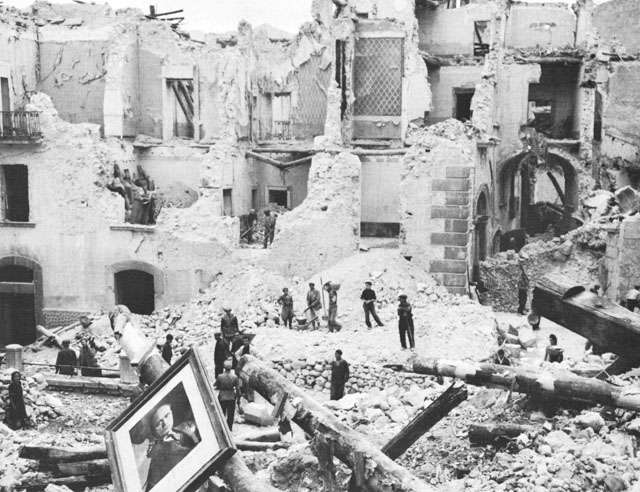
Salerno...

According to the most recent U.S. Census data, there are almost 22 million veterans living in America right now. Today, we celebrate them. Originally established as Armistice Day on November 11, 1919 to commemorate the first anniversary of the armistice of the Great War (as it was then known, prior to WW II), Veterans Day became what it is today in 1954 under President Eisenhower. So the history goes way back.

I’m reminded on this day of my Grampa Juraska. He fought in WW II as an Army buck Sergeant, a heavy machine gunner. The weapon system that his fire team used was the legendary Ma Duece—the M2 .50 cal. It’s still in service today, largely unchanged. My Grampa was in charge of the massively heavy tripod for this gun, as well as some of the ammo—I imagine every member of the team carried ammo—and his unit fought in Italy.

Italy was what Churchill called the “soft underbelly” of the Axis powers, and he was right. The Italians were largely fair weather friends to the Nazis, and Mussolini only became an attack dog when he felt it suited him because of easy prey. As a result, the Italians didn’t bring their A game, especially in Africa. Erwin Rommel, the 'Desert Fox,' said about the Italians, "Certainly they are no good at war." But after we beat the bastards, Germans included, back to El Alamein it was pretty obvious that our next move would be across the Med to Italy, so the Italians dug in and called their Nazi friends again for help.

sketch of the terrain at Salerno
At Salerno, where my Grampa fought, the battle went back and forth for days, and the terrain was nasty. Steep rocky ravines forced the battle into tight spaces where combatants relied mostly on speed and skill and fate. According to the story my Grampa told me years ago—only once—his team was maneuvering through one of these ravines to try to get into position and he lost his footing. He slipped and fell, the heavy tripod landing on him and knocking him out cold.

He awoke to probably four or five Germans encircling him at gunpoint, I can’t remember what he told me. The rest of his team was gone. He dealt with that abandonment for the rest of his life. He would, however, spend the next nineteen months of it in a Nazi POW camp in Germany, sleeping on dung and peeling potatoes. He really hated potatoes if I remember right.

And while this isn’t Memorial Day, remembering my Grampa is perfectly appropriate. He’s gone on to sleep until the Day of the coming of the Lord, but his example to me lives on in my own life. I was lucky, blessed, fortunate to have him in my life. My Grampa Juraska tought me about manhood. He taught me about manly virtues like honor and severity and fortitude. He taught me how to catch and gut a fish. How to change my oil, rotate my tires. And he was the one man in my life that I was thinking of when I became a U.S. Marine, because I wanted his approval; I wanted to see the look in his eyes that meant we shared something that can’t be put into words.

And I got that from him. When I came home on leave from boot camp, Grampa and I sat and talked about life in a way we never had before. I will always remember. I knew that he saw me different now; man to man even though I was only nineteen.

I’ll never forget my Grampa. He was a husband, father, working man, Army Sergeant, POW, bronze star recipient and World War II veteran. He was my Grampa, and I love him still. Thank God for our brave veterans. Thanks to Sgt. Albin Juraska's example, I am one too. Remember us today.

Thursday, November 10, 2011

Guest Post: D.G. Gass


The Stories Behind the Symbols

Poppies.  Close your eyes for a moment and think about the picture that word evokes. What do you see? Is it the scene from MGM's “The Wizard of Oz”, where Dorothy is running through the field of brilliant, technicolor flowers? Is it something a little more dark and nefarious, involving drug smugglers and gun runners? Perhaps it's something along the lines of a well-maintained garden bed, flowers dancing in the California sunshine.

For me, it's a small red flower, made of plastic and floral wire; a small tag with an imprint wrapped around it.  Much like your image, there's a story behind mine. A memory of standing in front of grocery stores and post offices on crisp November and May mornings in a girl scout uniform; a can in one hand and a bouquet of poppies in the other. For a nickle, a dime, or a quarter, you too could get a poppy to wear in your button hole, or wrap around your purse straps. Why do we do this? Well, because it was Poppy Day.

The story behind the poppy had gained more significance many years later. In a little hole-in-the-wall rib joint and bar outside of Oklahoma City, OK, a World War I veteran sat beside me, telling me about his time in Europe. It was the same type of story that I had heard from my father's uncle and again, years later from veterans in the VFW hall. It seems a lot of veteran's love to share “war” stories, especially if they realize there's a common bond.

Those individual tales may not be as dramatic as “Saving Private Ryan” or as epic as “Apocalypse Now”. And you more than likely will hear about the time they had to dig the latrine rather than storming the beach. Then there are some that are locked deep inside, never to be shared because of the personal demons that might be evoked dare they tell it.

The cast of characters is as varied and colorful as the yarns that are woven. The WWII veteran  who ignores the discomfort in his gnarled, arthritic fingers as he assembles the Buddy Poppy. The burly med tech with the braided pony tail, dressed in camouflage scrubs who reassures a crying wife that he'll take good care of her husband because he is his brother. The disciplined, but caring, nurse who not so long ago, was serving in a field hospital somewhere in the desert.

Tomorrow, November 11th, is “Poppy Day”, also known as Armistice Day, Remembrance Day or, here in the United States, Veteran's Day. You might  happen to see the poppy that I talk about. The one that was inspired by the poem “In Flander's Field” by Canadian physician and Lieutenant Colonel John McCrae, ninety years ago.  If you do, drop a quarter in the can and when you're handed the poppy, think about the stories that are wrapped around it.


About D.G. Gass:

Inspired by Walt Whitman and Carolyn Keefe, author D.G. Gass, from a young age, has always loved to write. It just took 40-years for her to believe in her work enough for it not to find the trash when she finished. Originally from Jeannette, PA, the Yankee transplant, currently resides in Columbia, SC with her husband and daughter, not to mention, three cats that own her.
A veteran of the US Air Force, whose day job is in healthcare IT, the author has a passion for veterans issues, which is the driving force behind her first book, "Ghosts of Arlington". When she's not writing, she can be found curled up with a good book, working on handcrafts, or staring blankly at walls in a catatonic state.